
Sleep is meant to restore, repair, and rebalance the body—but for millions of people, nighttime brings a hidden battle they may not even know they’re fighting. Sleep bruxism is one of the most common nighttime conditions affecting both dental and sleep health, yet it often goes undiagnosed for years. Characterized by involuntary teeth clenching or grinding during rest, it can quietly damage tooth enamel, strain the jaw, disrupt sleep cycles, and affect quality of life.
At 8 Hours Sleep Clinic, we help patients identify the root causes of sleep-related disturbances, including conditions linked to grinding and clenching. Understanding what’s happening in your body at night is the first step toward protecting your teeth, your sleep quality, and your long-term overall wellness.
In this comprehensive guide, we break down why nighttime grinding occurs, how it impacts your physical and emotional health, and what treatments can finally bring relief.
Understanding What Causes Sleep Bruxism
Although many people assume it’s just stress, the reality is more complex. Research shows that teeth grinding at night can be triggered by a combination of psychological, neurological, and physical factors. While stress does play a significant role, this condition often develops due to deeper imbalances in sleep patterns, airway function, or nervous system activity.
Some of the most common contributors include:
- Emotional stress or anxiety
- Abnormal bite or dental misalignment
- Genetics or family history
- Certain medications or lifestyle habits
- Disturbances in the central nervous system
- Coexisting sleep-related conditions
In many individuals, bruxism behaves similarly to a sleep movement disorder—occurring in brief episodes throughout the night and often during lighter stages of sleep.
The Link Between Bruxism and Sleep Quality
Many patients with nighttime grinding don’t realize they’re experiencing bruxism and sleep disorders simultaneously. When the jaw clamps or grinds involuntarily, the brain briefly “micro-arouses,” pulling the sleeper out of deeper restorative stages.
These tiny interruptions may not fully awaken a person, but they fragment sleep just enough to cause:
- Morning fatigue
- Increased stress levels
- Poor concentration
- Irritability or mood changes
- Headaches upon waking
- Jaw or facial soreness
Even more subtly, prolonged jaw tension can affect the balance of facial muscles, leading to discomfort and long-term inflammation if left untreated.
Why Jaw Clenching Happens at Night
Most people don’t realize they’re engaging in jaw clenching during sleep until a partner hears the grinding or a dentist notices the wear patterns. Nighttime clenching isn’t always conscious or connected to emotional tension. Instead, it can be a protective or reactive mechanism triggered by the brain.
Clenching may occur when:
- The airway becomes restricted
- The body experiences a spike in stress hormones
- The nervous system is overstimulated
- Sleep stages shift too quickly
- The bite feels misaligned or unstable
- Muscles respond to tension patterns developed during the day
This means nighttime clenching is not only about stress—it’s about how the brain and body negotiate safety, airway stability, and muscle balance during sleep.
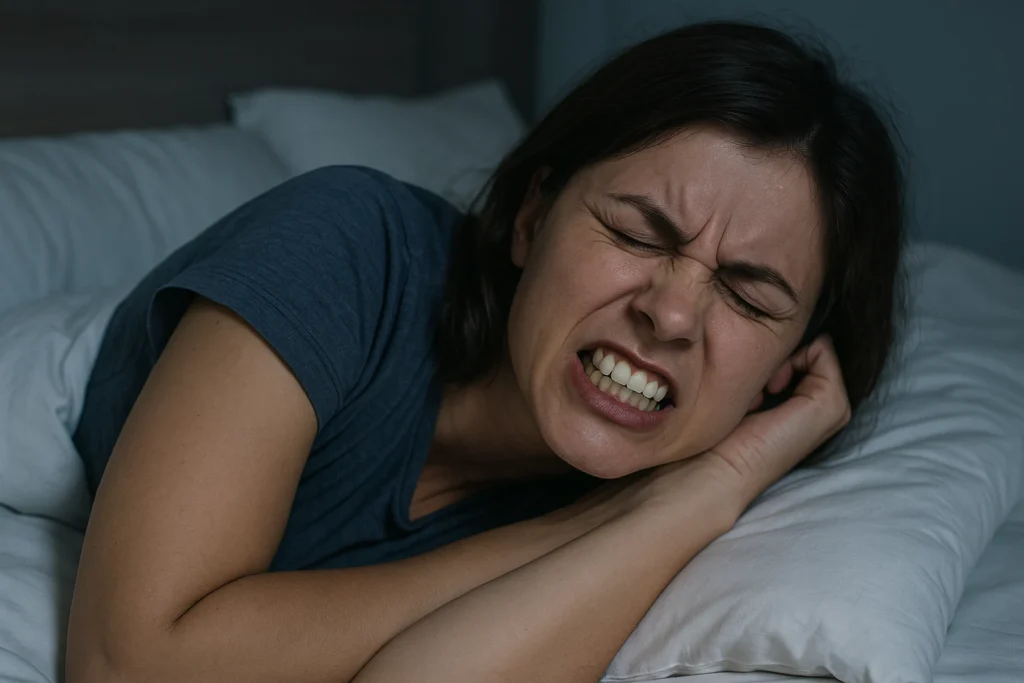
How Sleep Bruxism Affects Your Oral Health
While the grinding happens at night, its effects show up during the day.
Patients with chronic bruxism commonly report:
- Flattened or chipped teeth
- Receding gums
- Tooth sensitivity
- Jaw locking or clicking
- Tight or sore facial muscles
- Frequent headaches
- Pain in the neck, shoulders, or ears
Some even experience symptoms resembling temporomandibular joint dysfunction (TMJ/TMD). Over time, untreated grinding can weaken tooth structure and require restorative work such as crowns, bonding, or even full-mouth reconstruction.
By the time many people seek help, the damage is already substantial—making early intervention essential.
The Connection Between Grinding and Sleep Problems
Nighttime clenching and grinding are often signs of deeper issues within the sleep process. Many individuals with grinding episodes also show signs of sleep disorders, particularly those involving breathing or nervous system imbalance.
Common coexisting conditions include:
- Sleep apnea
- Insomnia
- Restless sleep patterns
- Periodic limb movement episodes
- REM-related disturbances
Because of this overlap, many dental professionals now recommend that patients undergo sleep evaluation when bruxism is present, especially if there are daytime symptoms like fatigue or mood changes.
How Professionals Confirm What’s Happening at Night
Examining your teeth is only part of the process. Modern evaluation includes technology and clinical expertise to identify underlying causes. At 8 Hours Sleep Clinic, we rely on advanced methods for diagnosing bruxism, including:
- Digital bite analysis
- Wear-pattern examination
- Polysomnography (sleep study)
- Airway function evaluation
- Jaw muscle activity assessments
- Comprehensive medical and dental history
When sleep studies reveal connections between grinding episodes and breathing disruptions, the treatment plan can address both dental and sleep health simultaneously—often with dramatically better results.
Treatment Options That Actually Work
The good news: relief is absolutely possible. Today’s approaches are more advanced than ever and designed to address not only symptoms but the underlying cause. Effective bruxism treatment options may include one or a combination of the following:
- Custom night guards designed specifically for grinding
- Bite alignment adjustments
- Stress-reduction or relaxation therapies
- Sleep apnea treatment for airway-related grinding
- Physical therapy for jaw and facial muscles
- Behavioral interventions for nighttime habits
- Medication only when clinically appropriate
At 8 Hours Sleep Clinic, we focus on personalized treatment plans that support both sleep and dental health—recognizing that every patient’s experience is different.
Conclusion
Sleep bruxism is more than a nighttime habit—it’s an interconnected condition affecting teeth, muscles, sleep cycles, and overall wellness. By understanding what causes grinding, recognizing the symptoms early, and seeking professional assessment, patients can protect their oral health and restore truly restful sleep. With the right treatment plan from experts who understand the relationship between dental and sleep health, long-term relief becomes not only possible but achievable.
